Why Does Anxiety Feel Worse at Night? What Your Body May Be Trying to Tell You
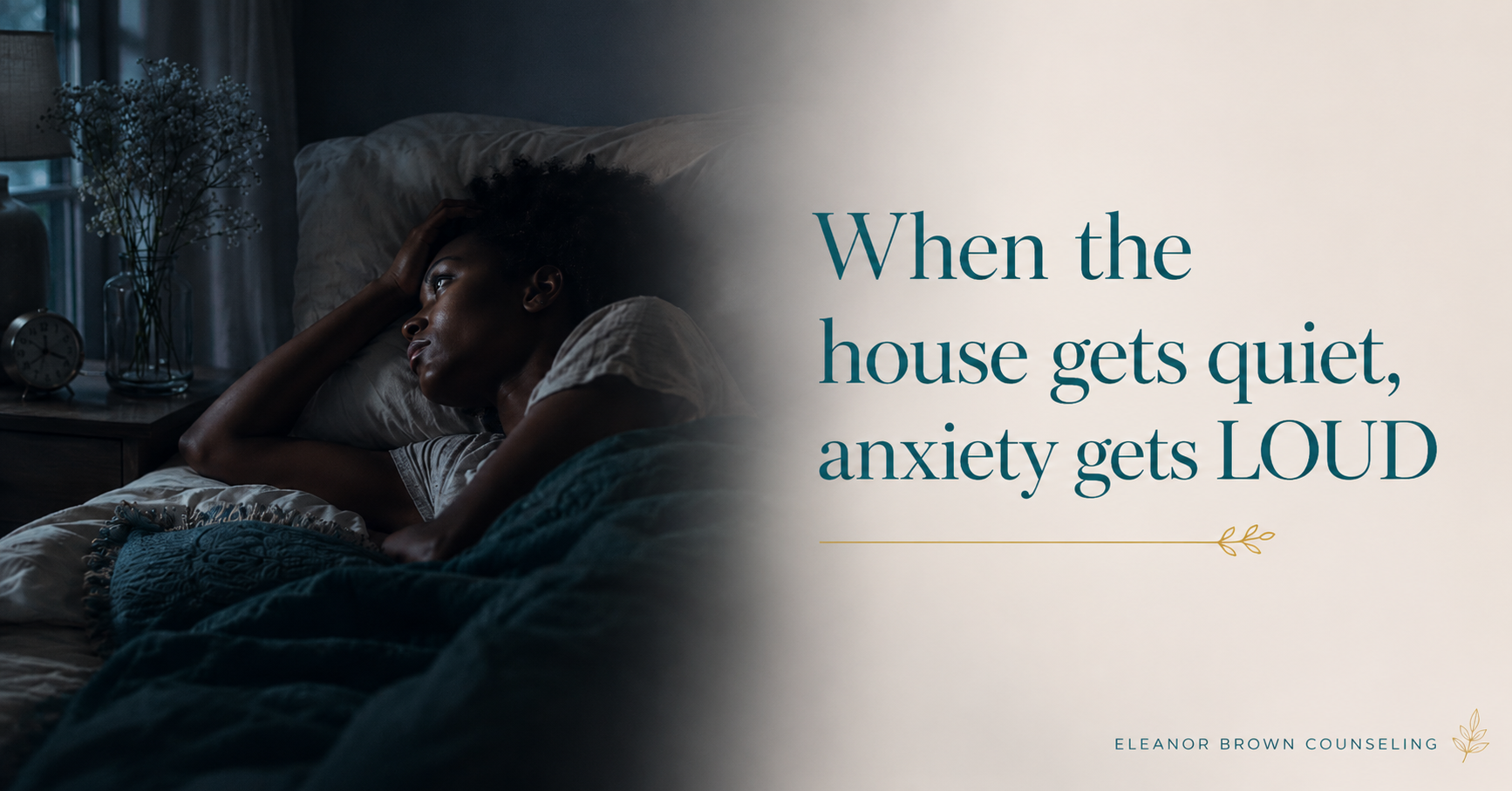
You finally crawl into bed. The house is quiet. The lights are off. And just when your body should be settling down, your mind starts running.
If you struggle with anxiety at night, you may know this feeling well. You replay a conversation from three days ago. You think about a bill. You wonder if you locked the door. Your chest feels tight. Your heart picks up speed. You toss. You scroll. You check the clock. It is 1:47 a.m., and you are wide awake again.
Nighttime anxiety can feel especially frustrating because you may be exhausted, but your body still feels keyed up. The racing thoughts at night are real. The tight chest is real. The restlessness is real. And if anxiety gets worse when you are trying to sleep, that does not mean you are broken, weak, or failing.
As a trauma therapist who works with anxiety every day, I can tell you this. Anxiety at bedtime almost always has more underneath it than what shows up on the surface. The racing thoughts may be the loudest part, but they are often the top layer of something deeper your body is trying to tell you.
Let's talk about what that might be.
What Is Nighttime Anxiety?
Nighttime anxiety is what happens when your body and mind feel keyed up, restless, or panicked specifically in the hours when you are trying to wind down or fall asleep. It can look like racing thoughts, a tight chest, a pounding heart, restlessness, sudden waves of dread, or the inability to fall asleep no matter how exhausted you are.
For some people, it shows up as overthinking. For others, it shows up in the body first. Tight shoulders. A clenched jaw. A stomach that will not settle.
Both are real. Both are valid. And both are worth paying attention to. Naming what is happening in your body is one of the first steps toward healing.
If you are wondering what healing could actually look like for you? Download the free 'A Better Way' Guide and take your first step through the BETTER Framework.

Why Does Anxiety Get Worse at Night?
There is rarely one single reason. Most of the time, several things are layered on top of each other.
1. Your Nervous System Has Been On All Day
If you have spent the whole day answering messages, managing kids, navigating a hard relationship, or pushing through work, your nervous system may have been on high alert for hours.
When you finally lie down, your body does not always know the day is over. Instead of relaxing, it may keep bracing, scanning, and preparing for the next thing.
2. The Distractions Are Gone
During the day, you have a hundred things pulling your attention. Work. Errands. People. Screens. Noise.
Distraction is not always bad. Sometimes it helps us get through the day. But when the house gets quiet and you are alone in the dark, the feelings you have been outrunning may finally catch up.
That is not a flaw in you. That may be your body saying, finally, I have your attention.
3. Your Body May Be Holding Unprocessed Stress or Past Pain
This is the layer many people miss.
If you grew up in a home where you had to stay alert, or if you have lived through painful experiences that never had room to heal, your nervous system may have learned that quiet and stillness are not safe. Sleep requires lowering your guard, and lowering your guard can feel scary to a body that learned to brace.
This is sometimes called hypervigilance. It is not a personality flaw. It is a survival response your body learned to protect you.
If your anxiety spikes the moment you try to rest, your body may be carrying old emotional wounds that need care.
4. You May Be Grieving Something You Have Not Named
Grief does not only show up after a death. People grieve lost relationships, lost dreams, lost versions of themselves, lost time, lost safety, or lost trust.
Grief that has not been acknowledged often shows up at night, when the noise dies down and there is finally room for it.
If you feel a heaviness you cannot explain when the lights go out, it may be worth gently asking yourself what you have been carrying.
5. Shame and Self Criticism Often Get Loud at Night
For many people, the inner critic waits until the lights are off to start talking. It says you should have done more, said less, been better, or been different.
Shame often gets louder when we are tired because a tired mind has fewer defenses against it. If your nighttime anxiety is full of harsh self talk, that is information. It may be showing you a wound that needs tending.
The Bigger Picture: Anxiety Has Layers
I want to say this clearly. Nighttime anxiety is not just a sleep problem.
You can do every sleep hygiene tip on the internet. Cool room. No screens. No caffeine after noon. Lavender oil. A weighted blanket. Those things can absolutely help, and I am all for them. But if your anxiety keeps coming back night after night, the answer is usually not another sleep tip.
The answer is usually layered. Your body is trying to tell you something. Your job is not to silence it. Your job is to get curious about what it might be saying.
That is what whole person healing is about. Not just managing symptoms, but understanding them.
In my work, this is part of what I call Begin to Notice. Before we can change what is happening inside of us, we first have to notice it with compassion. What is my body feeling? What story is my mind telling? What old wound might be getting stirred up? Nighttime anxiety can become an invitation to notice, not with judgment, but with care.
Tools That Can Help in the Moment
While you do the deeper work, here are a few grounding tools that may help your nervous system settle tonight. If anxiety feels overwhelming beyond bedtime, you may also find this post on coping with overwhelming anxiety helpful.
Slow your exhale. Breathe in for a count of four. Breathe out for a count of six or eight. A longer exhale can signal safety to your nervous system.
Feel your feet. Press your feet into the bed or the floor. Notice the pressure. This helps bring your body back into the present moment.
Name what you see. Look around the room and name five things you can see, four things you can touch, and three things you can hear. This gently reminds your brain that you are here, now.
Get out of bed if you need to. If you have been lying awake for a while, sit somewhere dim and quiet for a few minutes and let your body reset before trying again.
Write it down. A short brain dump on paper can take some of the weight off your mind. You do not need to fix it all tonight. You just need a place to release it.
These tools are not a cure. They are a way to meet yourself with care while you keep looking at the deeper layers.
A Word on Faith
If you are someone who holds a faith life, you may have wondered if struggling with anxiety means your faith is failing. It does not.
Anxiety is not a faith problem. It is a body and history problem. You can pray and still need support. You can trust God and still need a therapist. Seeking help is not a sign that your faith is weak. It is often a sign that you are taking your healing seriously.
When to Reach Out for More Support
Sometimes nighttime anxiety eases with grounding tools and a little more rest. Other times, it is a sign that something deeper is asking for attention.
It may be time to talk to someone if your anxiety is keeping you from sleeping most nights, if it is starting to affect your work or your relationships, if you notice it is connected to past pain you have never fully addressed, or if the tools that used to help have stopped working. Together, we can begin to understand what your anxiety is trying to tell you and help your body learn that rest can be safe again.
If you live in Texas or Florida, you can learn more about working with me on my anxiety counseling page or my trauma counseling page. Book a free 15-minute consultation and we can talk about whether working together is the right next step for you. I offer telehealth sessions, which means you can do this work from a place where you already feel safe. For some people, approaches like EMDR therapy can also help the brain and body process painful experiences that continue to show up as anxiety, hypervigilance, or trouble resting.
I would love to connect. There is no pressure and no script. Just a conversation.
Frequently Asked Questions About Anxiety at Night
Why is my anxiety so high at night?
Anxiety can feel higher at night because the distractions of the day are gone. Your body finally has space to register what it has been holding. For many people, nighttime anxiety is also connected to unprocessed stress, grief, shame, or past emotional wounds.
What is the number one worst habit for anxiety?
There is no single habit that causes anxiety for everyone, but one common pattern is chronic suppression. That means pushing feelings down, staying too busy to feel them, or telling yourself you are fine when you are not. Suppressed feelings often come back later, and for many people, they show up at night.
What helps with anxiety at night?
Grounding tools like slow exhales, pressing your feet into the floor, and naming what you see and hear can help your nervous system settle. Limiting screens and stimulants in the evening can also help. Long term, the most lasting relief often comes from understanding what is underneath the anxiety, not just managing the symptoms.
Eleanor Brown Counseling, PLLC serves clients via telehealth in Texas and Florida. If you are looking for trauma-informed therapy, anxiety counseling, or grief support and you live in Texas or Florida, Eleanor would love to connect.