Fear of Emotional Intimacy and the Desire for Connection

Fear of emotional intimacy doesn’t usually show up as “I don’t want love.” It often shows up as the opposite, a desire for connection. You crave closeness. And then, when someone actually gets near your heart, something in you tightens. You overthink. You pull back. You start telling yourself you’re too much, or not enough. If that’s you, I want you to hear this first: you’re not broken. Your system may have learned that closeness is risky, even when your heart still longs to be known.
Why Do I Struggle with Emotional Intimacy?
Struggling with emotional intimacy often means your nervous system learned early on that closeness was risky. Your body learned to stay alert, guarded, or self-protected in relationships, even before you had words for what was happening.
For example, you might have grown up in a home where emotions were dismissed, unpredictable, or overwhelming. Maybe you learned that sharing your feelings led to criticism, silence, or conflict. Over time, your system adapted. It learned that staying quiet, staying busy, or staying emotionally distant felt safer than being fully seen.
Now, as an adult, that same pattern can show up even in healthy relationships. You may logically know someone cares about you, but when emotional closeness increases, your body reacts. You feel anxious, tense, or suddenly unsure. You might pull back or shut down, not because you don’t care, but because your nervous system is trying to protect you.
From an attachment lens, this makes sense. Emotional intimacy activates old relationship templates. Your brain and body respond based on what they learned in the past, not just what’s happening in the present. That’s why this struggle can feel confusing and frustrating.
Your reactions aren’t random. They are learned responses that once helped you cope.
Why Am I Afraid of Attachment Even Though I Want Connection?
One of the most painful experiences I hear from clients sounds like this: “I want to feel close to people, but when it actually starts to happen, I panic.” That inner conflict can feel confusing and even shame-inducing.
This happens because two things are happening at the same time. Your attachment system is wired for connection. As humans, we are created for relationship. But if attachment was once paired with hurt, unpredictability, or loss, your nervous system learned to stay cautious. So while one part of you reaches for closeness, another part pulls back to stay safe.
For example, someone might deeply value relationships and long for emotional closeness, yet feel overwhelmed when a relationship becomes more serious. They may start questioning the relationship, focusing on flaws, or emotionally distancing themselves. This isn’t because they suddenly stopped caring. It’s because attachment activates old memories stored in the body, not just the mind.
From an attachment perspective, this push and pull is a protective pattern. The body is trying to prevent pain before it happens. Understanding this helps shift the narrative from “What’s wrong with me?” to “What did my system learn to protect me from?”
That shift alone can reduce shame and open the door to healing.
Why Does Getting Close Feel Unsafe in My Body?
For many people, fear of emotional intimacy isn’t just something they think about. It’s something they feel in their body. Their heart races. Their chest tightens. Their thoughts speed up. Or they go numb and shut down.
This is the nervous system doing what it was trained to do. When emotional closeness resembles past experiences of hurt, rejection, or instability, the body reacts as if danger is present. This can happen even when the current relationship is healthy. The nervous system isn’t asking, Is this person safe? It’s asking, Does this feel familiar?
For example, someone may notice that as a relationship deepens, they become more anxious, start overanalyzing conversations, or feel an urge to pull away. Another person might feel emotionally flooded and disconnected at the same time. These reactions are not signs of weakness. They are signs that the body learned to stay on high alert in relationships.
When we understand fear of intimacy through the lens of the nervous system, it becomes less about self-control and more about safety. Healing doesn’t come from forcing closeness. It comes from helping the body learn that connection can exist without danger.
The A Better Way Guide was created as a gentle starting place for this kind of work. It walks through emotional patterns, attachment, and healing in a way that blends clinical insight with compassion and faith, without pressure or overwhelm. It’s not about doing more. It’s about seeing yourself more clearly.
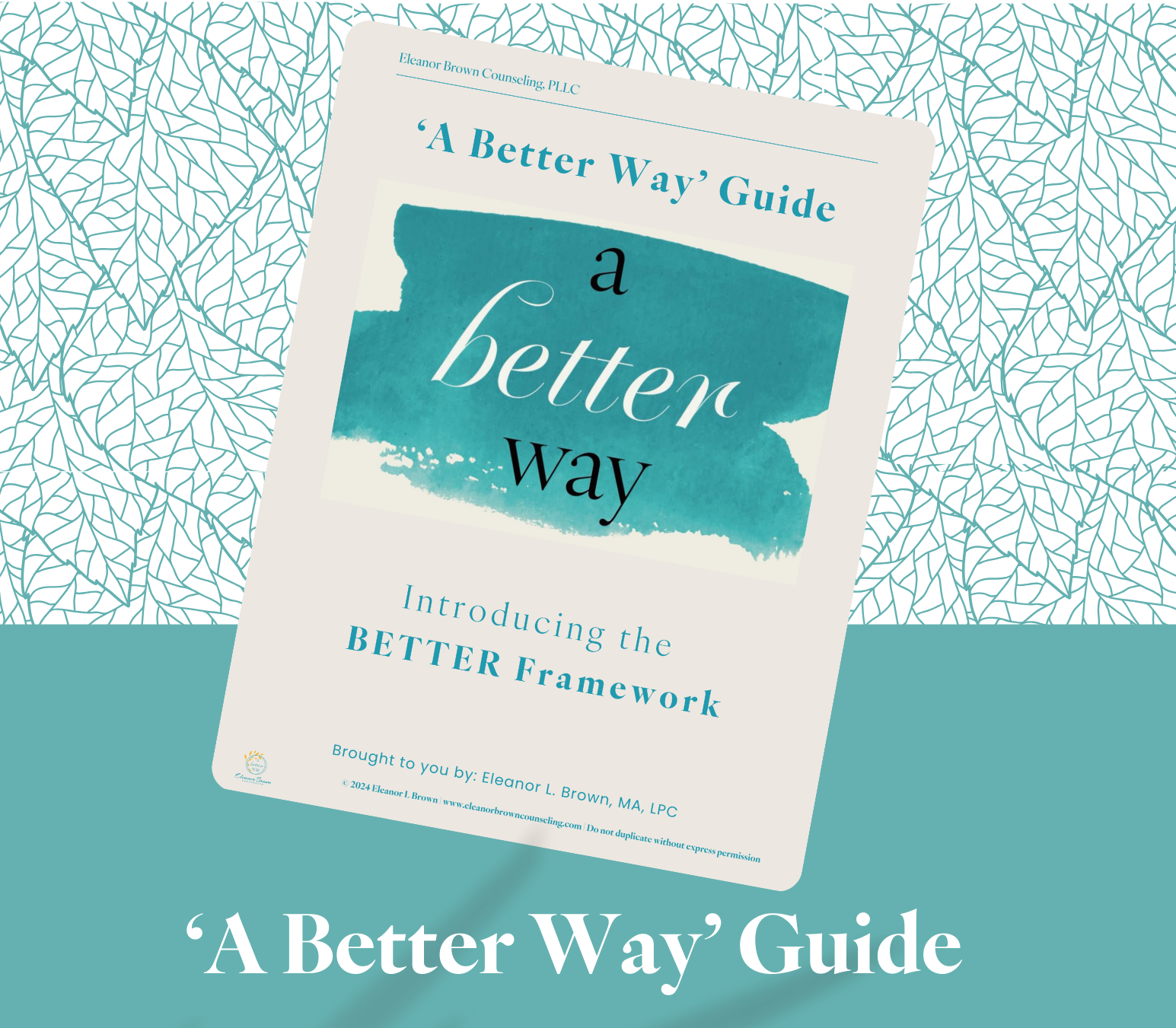
Is Fear of Emotional Intimacy Holding you back?
The A Better Way Guide helps you understand how patterns repeat and where healing can begin.
Is Fear of Intimacy a Trauma or Attachment Response?
Often, it’s both.
Trauma and attachment wounding frequently overlap, especially when emotional safety was inconsistent or missing in early relationships. Trauma isn’t always one obvious event. It can include repeated experiences of emotional neglect, unpredictable caregiving, criticism, boundary violations, or feeling unseen and unsupported over time.
When those experiences happen, the nervous system adapts. It learns that closeness requires caution. Attachment becomes associated with stress instead of comfort. So later in life, even safe relationships can trigger fear, hesitation, or emotional withdrawal.
I often explain this using Maslow’s hierarchy of needs. Before we can fully experience connection and belonging, we need a sense of safety. When emotional safety wasn’t established early on, intimacy can feel overwhelming rather than healing. The body is still scanning for danger, even when the mind wants closeness.
In my book, A Better Way: Integrating Faith and Psychology to Heal Inner Wounds, I talk about how attachment wounds and feeling unsafe often go hand in hand. Healing doesn’t start with forcing connection. It starts with understanding what your system learned, why those responses make sense, and how safety can be rebuilt gently, over time.
That understanding is part of the healing.
Why Do I Pull Away When Relationships Matter Most?
Pulling away is rarely about not caring. It’s often a protective response that shows up when emotional closeness crosses an internal threshold. As relationships deepen, the nervous system may anticipate loss, rejection, or emotional overwhelm, even if there is no immediate threat.
For some people, pulling away looks like becoming distant or less responsive. For others, it shows up as overthinking, finding reasons the relationship won’t work, or suddenly feeling emotionally numb. These patterns can feel confusing, especially when the relationship is important and desired.
From an attachment perspective, this is the nervous system choosing what once worked. Distance may have provided safety in the past. It reduced exposure to disappointment or hurt. While this strategy can protect in the short term, it often creates loneliness and reinforces the belief that closeness isn’t safe.
Understanding this pattern matters. When we recognize pulling away as protection rather than failure, shame begins to loosen its grip. That shift allows space for curiosity, compassion, and eventually, change.
Does Struggling With Intimacy Mean Something Is Wrong With My Faith?
No. Struggling with emotional intimacy does not mean your faith is weak, broken, or lacking.
Many people carry quiet spiritual shame around their relational struggles. They wonder why prayer hasn’t made this easier or why they still feel guarded when connection is something they value deeply. Emotional patterns rooted in attachment and the nervous system don’t disappear simply because someone has strong faith. Healing often requires understanding how the body and mind learned to respond to relationships.
Faith can be a source of strength and comfort, but it was never meant to override the need for emotional safety. Scripture reminds us that connection is meant to support us, not burden us. Two are better than one… if either falls, one can help the other up (Ecclesiastes 4:9–10). That kind of support assumes safety, presence, and care.
Healing often happens when faith and therapy work together. Faith offers meaning, hope, and grace. Therapy helps untangle the emotional patterns that make closeness feel unsafe. One does not replace the other.
Moving Forward With Compassion
When people finally sit across from me and say, “I survived… but I don’t know how to live,” that’s often where healing begins.
Fear of emotional intimacy does not mean you are incapable of connection. It means your nervous system learned to protect you in ways that once made sense. With understanding, support, and safe relationships, those patterns can soften.
Healing doesn’t happen all at once. It happens through intentional, compassionate steps. Steps that help your body learn that closeness doesn’t have to come at the cost of safety.
If you’re looking for support, I offer therapy for anxiety, trauma, and attachment related concerns, integrating clinical care with respect for faith when desired. You don’t have to carry this alone.
As a therapist who offers faith-based counseling, I work with individuals who feel stuck, overwhelmed by anxiety, or caught in repeating patterns and want a space where both emotional healing and faith are respected.
If you’re curious about working with a therapist who integrates emotional healing and faith, schedule a free consultation to see if it feels like a good fit. Healing doesn’t require rushing, just a safe place to begin.
📍 Eleanor Brown, MA, LPC — faith-based therapist in Central Texas
💻 Serving clients across Killeen, Texas and Miami, Florida via telehealth